

Many people notice gradual discoloration while looking at older photos and wondering why their smile appears darker despite years of brushing and regular dental care. These color changes are extremely common with age and are not necessarily a sign of poor oral hygiene or neglect.
The short answer is yes; many forms of staining and age-related darkening can often be improved noticeably. However, the right approach depends on whether the discoloration is limited to surface buildup or connected to deeper structural changes inside the tooth itself. Some smiles respond well to whitening, while others may require more customized cosmetic strategies.
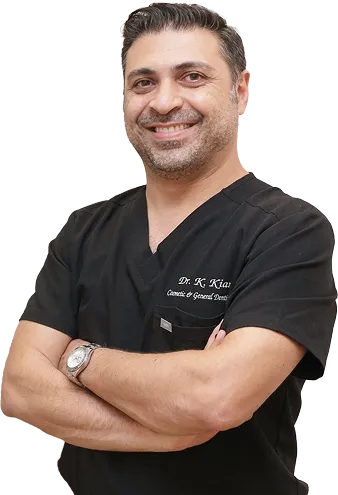
At Encino Dental Esthetics, Dr. Kaivan Kiai takes a biologically grounded approach to cosmetic evaluation, focusing on enamel condition, stain depth, tooth sensitivity, and realistic long-term smile health rather than one-size-fits-all whitening trends.
Here is the Quick Answer:
Teeth naturally darken over time as enamel thins, dentin becomes more visible, and stains accumulate from decades of daily habits. Some discoloration responds well to professional whitening, while deeper structural color changes may require bonding or veneers.
Dr. Kaivan Kiai evaluates enamel condition, sensitivity risks, and existing dental work before recommending cosmetic treatment at Encino Dental Esthetics.
The Twin Forces of Discoloration: Extrinsic vs. Intrinsic Staining

Not all tooth discoloration develops the same way. Some changes happen on the outer enamel surface from years of stain accumulation, while others develop gradually from structural changes occurring inside the tooth itself over time.
Begin Your Smile Journey with Dr. Kaivan Kiai


Extrinsic Staining (The Outer Layer)
Extrinsic staining refers to discoloration that builds up on the enamel surface from repeated exposure to deeply pigmented foods and beverages. Coffee, tea, red wine, berries, and past tobacco use can gradually leave dark particles trapped within microscopic surface irregularities in the enamel.
Over decades, these external stains may dull smile brightness even in people who brush consistently and maintain regular cleanings.
Because this type of color change sits closer to the outer layer of the tooth, it often responds differently than deeper structural darkening discussed later in cosmetic evaluations and professional whitening discussions.
Intrinsic Yellowing (The Inside Shift)
Intrinsic discoloration develops from gradual internal changes within the tooth rather than surface stain accumulation alone.
As people age, the internal structure of the tooth naturally changes color and density, creating a deeper amber or darker appearance that may show through more noticeably over time.
This process is biologically normal and may occur even in people with strong oral-hygiene habits and consistent dental care. Unlike external staining, internal darkening behaves differently because the color shift originates beneath the tooth’s outer surface rather than on top of it.

The True Science: Why Do Teeth Yellow With Age?

Age-related discoloration is not caused by surface staining alone. Over time, the tooth itself gradually changes structurally through enamel wear, internal color shifts, and microscopic texture changes that affect how light reflects from the smile.
Enamel Thinning Over Time
Enamel is the thin outer shell that gives teeth much of their brighter, opaque appearance. After decades of chewing, acidic foods, temperature changes, and daily friction, this protective layer slowly becomes thinner and less dense.
As enamel loses thickness, it also becomes more translucent, allowing darker tones underneath the surface to show through more clearly. This process develops gradually over many years and is considered a normal part of dental aging rather than a sign of poor hygiene or neglect.
Secondary Dentin Growth
Inside every tooth is a naturally darker inner layer called dentin. Throughout life, teeth continue producing additional dentin as a protective response to normal aging and everyday function. Because dentin carries a warmer yellow or amber tone than enamel, this gradual thickening can slowly deepen the overall appearance of the tooth from within.
Even people with healthy brushing habits may notice increasing internal darkening over time because these color changes originate beneath the visible enamel surface rather than on top of it.
Micro-Cracks & Surface Texture Changes
Over the years, enamel also develops microscopic surface irregularities and tiny cracks that are often invisible to the naked eye. These subtle texture changes can trap pigments more deeply within the tooth surface, especially after long-term exposure to coffee, tea, wine, or other dark foods and beverages.
Once discoloration settles into these deeper irregularities, routine brushing may not fully remove it. This is one reason smile brightness can gradually fade even when daily oral-hygiene habits remain consistent.
Can Aging Yellow Teeth Be Safely Reversed? Your Action Plan

Different types of discoloration respond to different cosmetic approaches. Surface staining, internal darkening, enamel thickness, exposed roots, and overall tooth structure all influence which treatment options may be most effective and appropriate for long-term cosmetic and structural goals.
Tier 1 — Professional In-Office Teeth Whitening
Professional cosmetic brightening uses dentist-supervised peroxide-based whitening agents designed to penetrate enamel more effectively than many over-the-counter products. These whitening compounds help break apart deeper stain molecules trapped within the tooth structure, improving overall brightness in many cases of age-related discoloration. However, results can vary depending on enamel thickness, existing restorations, and the depth of intrinsic darkening beneath the surface.
At Encino Dental Esthetics, Dr. Kaivan Kiai carefully evaluates enamel condition, exposed root areas, and sensitivity risk before recommending professional whitening, especially for older adults with thinner enamel or gum recession. In some cases, cosmetic brightening may improve discoloration significantly without fully eliminating deeper structural color changes.
Tier 2 — Cosmetic Dental Bonding
Cosmetic dental bonding may help mask localized discoloration, worn edges, or areas that respond poorly to peroxide-based brightening. This approach uses a tooth-colored composite material placed directly over selected portions of the tooth to improve color consistency and surface appearance.
Bonding is typically considered selectively rather than across the entire smile and depends heavily on enamel condition, bite patterns, and the location of the discoloration. Because composite materials can wear or stain gradually over time, long-term maintenance expectations should be discussed realistically during cosmetic evaluation and treatment planning.
Tier 3 — Porcelain Veneers (The Structural Reset)
Porcelain veneers may be considered when discoloration is deeply intrinsic or when enamel has become too thin or translucent for cosmetic brightening alone to create meaningful improvement. Veneers are custom porcelain coverings bonded to the front surface of the teeth to mask deeper underlying discoloration and improve overall color uniformity.
This option is highly individualized and depends on enamel integrity, bite function, and broader cosmetic goals. While porcelain materials are generally resistant to future staining and can provide significant color correction, veneers are not necessary for every patient with discoloration concerns.
Dr. Kiai evaluates structural and cosmetic factors carefully before recommending whether veneers are biologically and aesthetically appropriate.
The Warning: Why to Avoid DIY Whitening Fads

DIY whitening trends often appeal to people frustrated by gradual discoloration and hoping for a quick cosmetic fix at home. However, many abrasive or acidic whitening methods can create additional problems for aging enamel that is already thinner, more translucent, and increasingly vulnerable over time. Understanding the limits of at-home whitening becomes especially important when enamel integrity, sensitivity, and long-term cosmetic safety are part of the concern.
Charcoal toothpastes, baking soda scrubs, lemon juice remedies, and aggressive whitening hacks may temporarily brighten teeth by removing surface buildup. This can create a temporary illusion of a brighter smile, while repeated abrasion slowly wears away protective enamel and exposes more of the darker dentin underneath over time.
As enamel becomes thinner, the naturally darker dentin inside the tooth becomes more visible, making structural darkening appear stronger over time. Acidic DIY mixtures may also increase sensitivity, especially around exposed roots or gum recession areas.
Patients already experiencing enamel wear or root exposure should approach cosmetic brightening cautiously and consider professional guidance before repeatedly using abrasive whitening methods.
Rejuvenate Your Smile in Encino with Dr. Kiai
Changes in smile brightness and tooth color are a common part of aging, even in people with strong oral-hygiene habits. Throughout Encino and the San Fernando Valley, many adults seek cosmetic guidance not for dramatic transformation, but to address gradual discoloration, enamel wear, and gradual appearance changes in a realistic, healthy way.
At Encino Dental Esthetics, Dr. Kaivan Kiai evaluates the full structural condition of the teeth before recommending cosmetic treatment. This includes assessing enamel integrity, discoloration depth, exposed-root sensitivity risks, existing dental work, and the overall condition of the tooth structure.
Rather than relying on one universal approach, treatment recommendations are based on how the enamel and underlying tooth layers have changed over time. In some situations, conservative brightening may be appropriate, while deeper structural color changes may require alternative cosmetic or restorative strategies.
For those considering cosmetic improvements, Encino Dental Esthetics offers individualized consultations focused on enamel health, structural considerations, and realistic smile enhancement options.
To discuss whitening, bonding, veneers, or other cosmetic options for age-related discoloration, call Encino Dental Esthetics at 858-422-3863 to schedule a cosmetic consultation with Dr. Kiai.