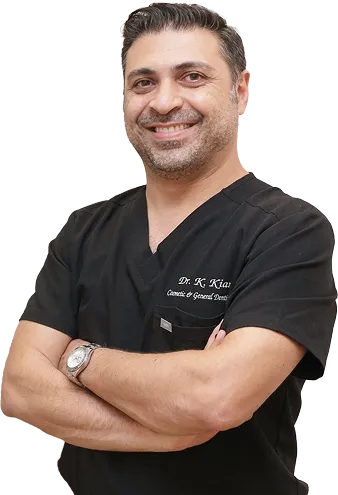


Reviewed by Dr. Kaivan Kiai, DDS · Updated October 2026
Smoking does not automatically rule out dental implants, but it increases concerns about healing and long-term implant success. Smoking also raises the risk of surgical wound infection, so stopping before treatment and remaining smoke-free during recovery are important parts of planning.1, 2
The practical questions are whether your mouth is ready for an implant, how to prepare for surgery, and what to do if you already have implants and smoke. Your dentist’s instructions should reflect your health, the treatment involved, and how the site heals.
Here is the Quick Answer:
Smoking is a risk factor to discuss openly, not a reason to avoid a consultation.
- Candidacy is individual: Your gums, bone, medical history, and tobacco use all belong in the assessment.
- Ask for a stop-smoking plan before surgery: There is no universal date when smoking becomes safe for an implant.
- Vaping is not a proven safe workaround: Discuss every tobacco or nicotine product you use.
- Existing implants still need monitoring: Report swelling, bleeding, persistent discomfort, or looseness.
Can You Get Dental Implants If You Smoke?

Yes, smoking alone does not determine whether you can have dental implants. A dentist must assess whether the expected benefits justify the added risk. Treatment may be postponed if the site or your health makes healing less predictable.1
Bring details about what you smoke, how much you use, previous attempts to quit, and any other nicotine products. Ask whether existing gum disease or insufficient bone needs attention first. Being honest gives the clinician information needed for planning; it does not guarantee approval or refusal.
An implant is a post placed in the jawbone to support replacement teeth. Bone heals around it through osseointegration; the step-by-step implant guide explains the broader treatment process.1
How Smoking Affects Implant Healing
Healing depends on circulation, tissue repair, and the body’s response to bacteria. Smoking can interfere with these processes in different ways.2
Less Blood Flow and Oxygen
Nicotine affects blood vessels, while carbon monoxide reduces oxygen delivery. Together with other smoke exposure, these changes create less favorable conditions for healing tissue.2
Slower Wound Healing
Smoking can delay surgical wound healing. The surface looking closed does not establish that deeper healing is complete; gum healing around implants and bone integration are different parts of recovery.1, 2
Weaker Bonding with the Bone
An implant needs a stable connection with living bone. Smoking can compromise healing and reduce long-term success; failure to integrate is not the same as the body “rejecting” a transplanted organ.1
More Infection Risk
Smoking alters immune function and increases the risk of infection at a surgical wound. Good cleaning is important, but it does not cancel out smoke exposure.2
Dry Mouth and Plaque Control
Tobacco can worsen mouth dryness. Saliva helps wash away food and control harmful germs, so persistent dryness deserves attention rather than simply more mouthwash. It can also contribute to bad breath.3
What Are the Risks for Smokers with Implants?

Peri-implant mucositis is inflammation in the soft tissue around an implant without supporting bone loss. Peri-implantitis includes inflammation and loss of supporting bone. Smoking is a risk factor for peri-implant disease, alongside poor plaque control, previous periodontal disease, and diabetes.4
Warning Signs to Watch For
Arrange a dental check for changes such as:
- Red, swollen, tender, or easily bleeding gums around the implant.
- Pus, a persistent bad taste, or continuing discomfort.
- Receding gum tissue or a newly visible edge around the restoration.
- A crown or implant that feels loose.1, 4
These changes require examination; they do not establish the diagnosis. A loose crown and a loose implant body are different problems. Avoid repeatedly testing the area by pushing or wiggling it.
How Long Should You Stop Smoking Before and After Implant Surgery?
Start discussing cessation as soon as surgery is being considered. General surgical guidance supports stopping 4–6 weeks before an operation and remaining smoke-free for at least 4 weeks afterward to reduce wound complications. These are general surgery targets, not a universal implant protocol or permission to restart afterward.5
Your implant surgeon should confirm a plan for your procedure, particularly if grafting or an extraction is involved.
| Stage | Guidance to Discuss | Reason |
|---|---|---|
| Before Surgery | General Surgical Target: Stop 4–6 Weeks Beforehand5 | Better Conditions for Wound Healing |
| Immediately after Surgery | Remain Smoke-Free; Follow Your Surgical Instructions | Protection of the Healing Wound |
| Continued Recovery | General Surgical Target: Remain Smoke-Free for at Least 4 Weeks; Implant Healing May Require Longer5 | Bone Integration Continues beyond Surface Healing |
| Long Term | Aim to Stay Smoke-Free | Ongoing Implant and Gum Health |
Bone healing around an implant can take several months or longer, so the calendar alone cannot establish readiness to resume normal habits.1 If surgery is sooner than the suggested preparation window, contact the treating team rather than assuming it is too late to benefit or canceling the appointment yourself.
If your oral surgery also includes a tooth extraction, follow the separate instructions for protecting the socket. Dry socket is an extraction complication, not another name for implant failure.
If stopping feels unrealistic, say so. Reducing use can be a step toward quitting, but it should not be presented as equivalent protection or as a safe amount to smoke.
What About Vaping, E-Cigarettes and Smokeless Tobacco?
Vaping is not a proven safe substitute during implant recovery. Many products contain nicotine, and aerosol can contain other harmful substances. Long-term evidence is still developing; it would be inaccurate to assign vaping the same implant failure rate as cigarettes or call nicotine-free vaping harmless.6
Smokeless tobacco and nicotine pouches also belong in the conversation. Pouches sit between the lip and gum and deliver nicotine through the mouth’s lining. They are not established implant aftercare products or approved smoking-cessation aids. Do not place them against a healing site.7
Nicotine replacement therapy is a separate discussion. Clinician-guided cessation products should not be treated as equivalent to smoking, which adds carbon monoxide and combustion products. Ask your dentist or physician how your quit plan fits the operation; do not start, stop, or change a treatment based on this article.5
Smoking, Bone Grafts and Sinus Lifts
If an implant plan includes bone grafting or a sinus lift, there is additional tissue healing to protect. Smoking-related impairment of circulation and wound repair is therefore another concern to discuss before agreeing on the surgical schedule. This does not mean every graft in a smoker will fail.2
Ask whether the graft and implant will be staged and what findings will establish readiness for the next step. The bone graft recovery guide covers recovery separately; the timing should come from the treating clinician.
How to Protect Your Implants if You Smoke

Keep the plan manageable: know how to care for the site, who to contact, and where to get support with cravings.
- Follow your surgical instructions. Ask before changing brushing or rinsing around a fresh wound. Use the implant eating guide and soft food guide for meal planning alongside your own aftercare instructions.
- Clean around healed implants daily. Include the spaces between teeth and implants using the technique recommended for your restoration.4
- Keep professional maintenance visits. Ask how often your implants need checking and cleaning; smoking does not determine a single universal recall interval. Routine dental care is part of continued monitoring.4
- Report changes early. Do not wait for substantial pain before mentioning bleeding, swelling, or looseness.
- Address dry mouth. Sip water and tell your dentist if dryness persists; hydration does not neutralize smoking’s effects.3
- Make quitting support practical. Ask your dentist or doctor for help, identify situations that trigger smoking, and enlist someone who can support your plan. Free telephone coaching is available through 1-800-QUIT-NOW.8
For other everyday risks, see habits to avoid with dental implants.
Implant Care for Smokers in Encino with Dr. Kiai

At Encino Dental Esthetics, Dr. Kaivan Kiai discusses conditions and treatment options during consultations, with recommendations based on clinical findings, patient goals, and long-term oral health.9
If you smoke and are considering dental implants in Encino, bring your questions about candidacy, cessation, and maintenance. If you already have implants, describe any changes in comfort, gum appearance, or stability.
Request an implant consultation to discuss your circumstances and the next appropriate step.
Sources
- U.S. Food and Drug Administration — Dental Implants: What You Should Know
- World Health Organization — Smoking Greatly Increases Risk of Complications after Surgery
- National Institute of Dental and Craniofacial Research — Dry Mouth
- American Academy of Periodontology — Peri-Implant Diseases
- American College of Surgeons — Quit Smoking before Your Operation
- Centers for Disease Control and Prevention — Health Effects of Vaping
- Centers for Disease Control and Prevention — Nicotine Pouches
- Centers for Disease Control and Prevention — How to Quit Smoking
- Encino Dental Esthetics — Dr. Kaivan Kiai